At a Glance
This article explores whether augmented reality solutions can complement and, in some cases, even replace traditional manual quality inspections. It compares the current state of manual measurement methods with AR-assisted quality inspections and examines the strengths and weaknesses of each approach.
Quality Inspections with manual measurement methods
Many industrial sectors, including agricultural machinery manufacturing, special-purpose machine building, and their suppliers, are currently undergoing a technological transformation in quality inspection. This change particularly affects the traditional manual measurement methods used in quality inspections.
A key challenge for industries such as agricultural and heavy machinery manufacturing is the production of highly customized components tailored to individual customer requirements. As a result, production processes still rely heavily on manual work. Inspections are frequently carried out using conventional tools such as physical inspection templates.
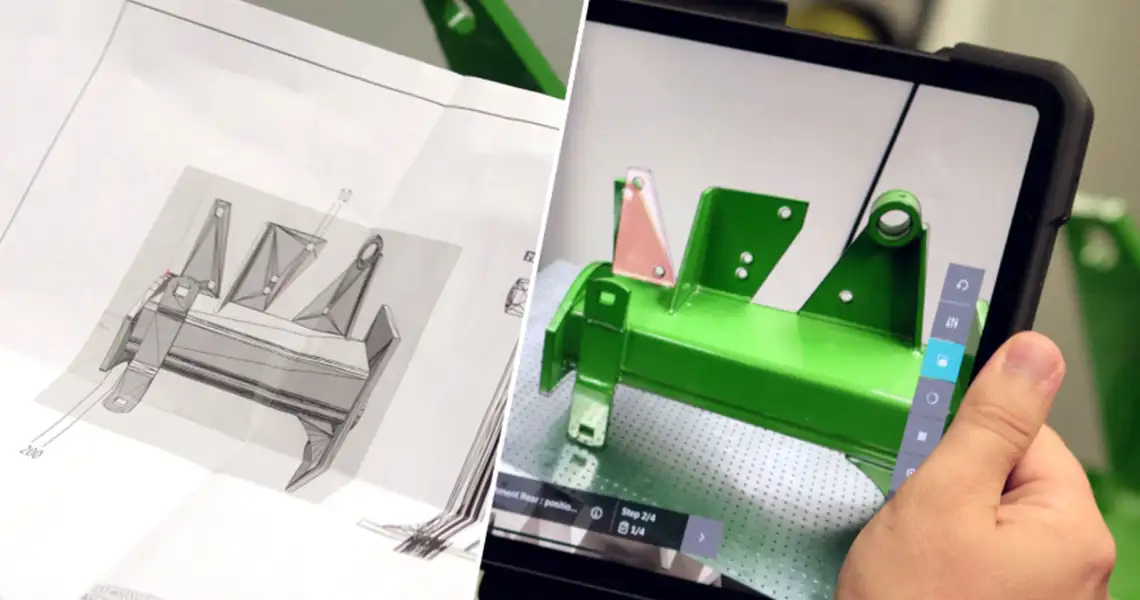
Similarly, industries such as toolmaking still often perform quality inspections based on technical drawings or simple checklists, making the process both time-consuming and labor-intensive.
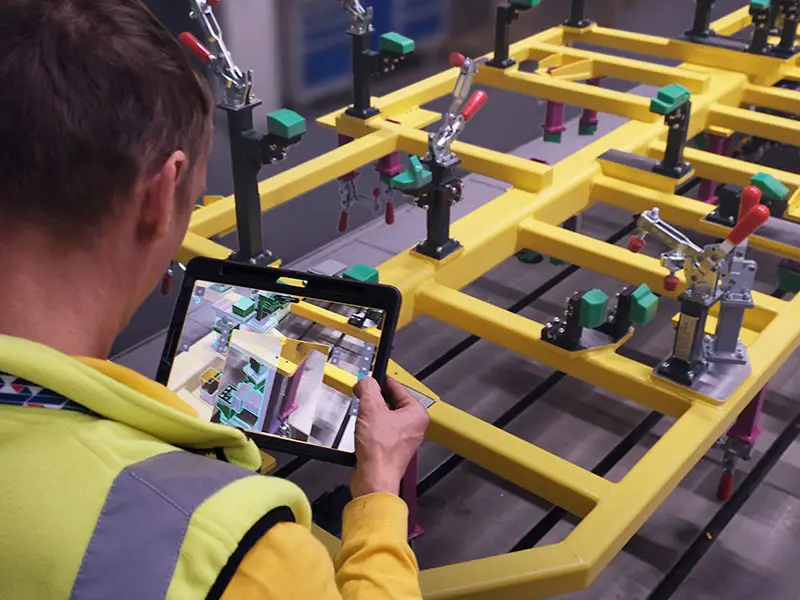
However, manual methods do not always deliver the required level of accuracy and are prone to human error, particularly when inspectors repeat complex inspection tasks multiple times during a shift. This increases the risk that missing or incorrect components will go undetected. Moreover, the accuracy of inspection results depends heavily on the operator’s experience and can vary considerably from one person to another. These limitations raise an important question: How can innovative technologies make quality inspections more efficient?
Performing quality inspections with Augmented Reality
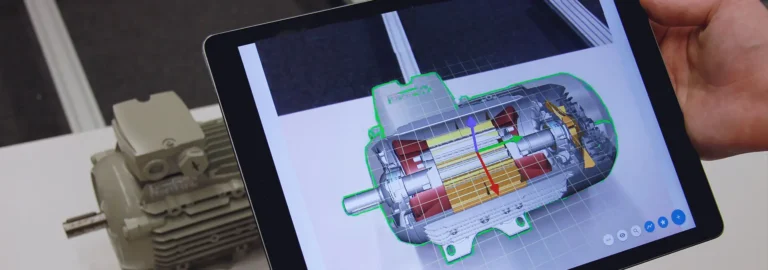
In recent years, augmented reality (AR) has become increasingly important across various industrial applications, including quality control. AR solutions such as Twyn use a tablet to overlay CAD data directly onto the corresponding physical component in real time. This digitally enhances the real world with computer-generated information and enables a direct comparison between the target design and the actual manufactured part. As a result, AR is highly useful for quality inspections because deviations become immediately visible.
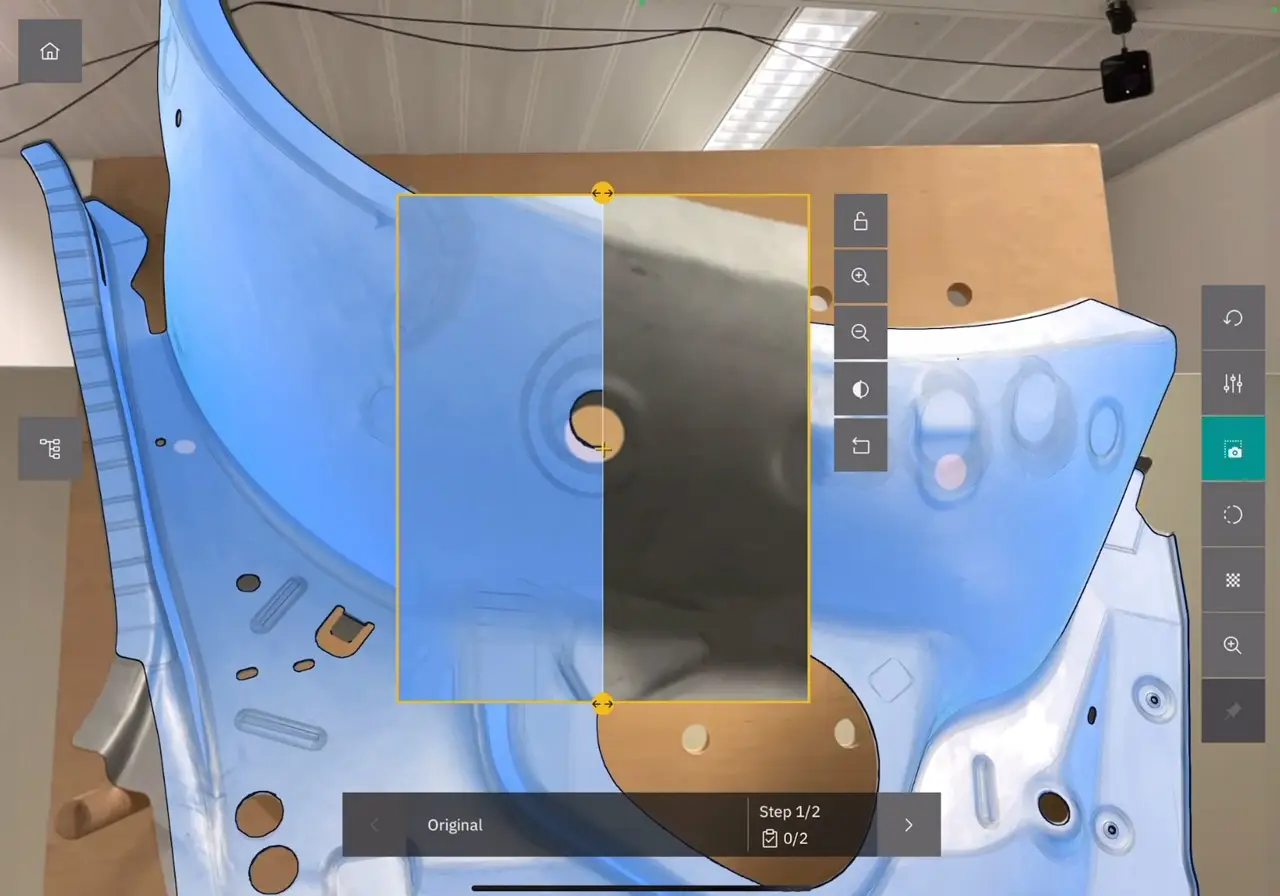
Early visual feedback and assisted defect detection significantly reduce error rates, minimize scrap, and decrease rework. These benefits also result in substantial time savings, freeing up capacity for other activities. According to user feedback, quality managers report inspection times that are up to 80 percent shorter and defect rates that are up to 90 percent lower after adopting AR-based quality inspection solutions.
AR enables location-independent inspections
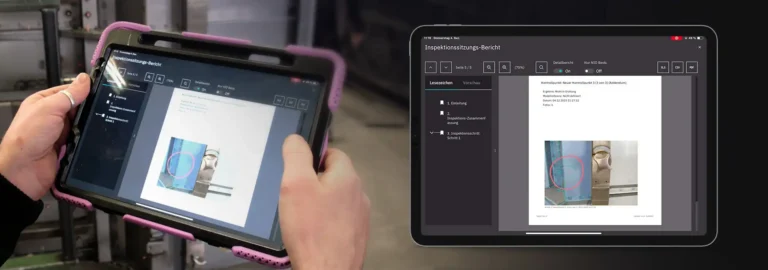
What benefits do AR-assisted quality inspections actually offer compared with manual measurement methods? AR solutions such as Twyn are intuitive to use and support a digital workflow. Twyn requires only a standard tablet, making implementation straightforward and lowering the barrier to adoption. During the inspection, documents and reference images can be displayed directly on the tablet screen to support the process. This helps create a fully digital workflow and eliminates the need to switch between analog and digital documents.
Another advantage of AR-assisted quality inspections is that they can be carried out directly at the point of production. Using a tablet allows manufacturers to inspect parts at virtually any stage of the production process, from incoming goods inspection to final quality control. On-site inspections also make it possible to increase inspection frequency, enabling more components to be checked each day.
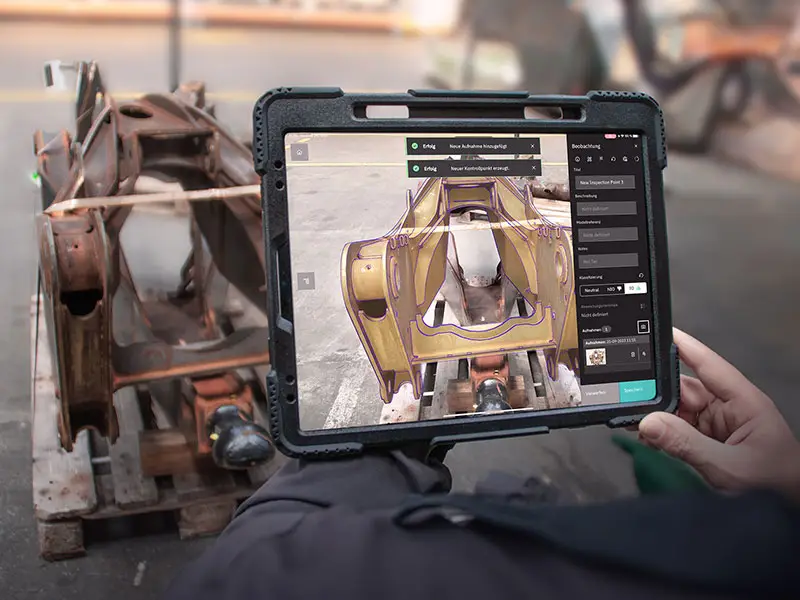
By comparison, quality inspections using manual measurement methods require considerably more time and preparation, especially when components have to be transported to dedicated inspection rooms. Furthermore, manual quality inspections often rely on measurement tools such as physical inspection templates. These tools can be expensive because a separate template must be manufactured for each part to be checked, and the inspection process remains prone to human error.
Conclusion
Augmented reality solutions are an effective complement to traditional manual quality-control methods. In some cases, once deviations have been detected, inspectors can quickly decide whether a component requires a more detailed metrology inspection or can proceed to the next production stage.
Key Takeaways from this blog post:
- Manual measurement methods are time-consuming and prone to human error.
- AR solutions enable fast, intuitive, and location-independent inspections through real-time visualization.
- AR-assisted inspections result in fewer errors, lower costs, and more efficient quality-control processes.
By complementing traditional manual inspection procedures with AR solutions such as Twyn, manufacturers can significantly improve inspection efficiency. The combination of time savings, fewer errors, and streamlined workflows creates long-term value and contributes to a more effective quality-control process.